
Not just who won.
How you played.
Raydel Rating is a performance-informed, partner-independent skill identity for padel — built to travel with you across every court, partner, and club.
Every great sport eventually gets a universal language of skill.
Chess has Elo. Golf has handicap. Tennis has UTR and NTRP. Pickleball has DUPR. These systems matter because they do more than rank players — they create a portable performance identity.
They answer the question: How good are you, really?
Padel does not yet have a universally trusted answer. That's the opportunity behind Raydel Rating.
"Raydel Rating is designed to become for padel what Elo is for chess and DUPR is for pickleball — a portable, trusted skill identity informed by how you actually play."
Opponent rating and match outcome are a start — not a finish.
Partner Distortion
Current systems already account for opponent rating — but not your partner's level. A loss alongside a weaker partner carries the same weight as being outclassed. That's a structural flaw no existing system addresses.
Style & Side Noise
Matchup chemistry, court side, and opponent playing style create result variance that has nothing to do with your individual skill — and no current rating system attempts to filter it out.
No Individual Performance Data
Existing systems measure what happened — win or loss, and against whom. They do not measure how you played. Your technical execution, shot selection, court coverage, winners, errors, forehand percentage, overhead accuracy — none of it is captured. That's the gap Raydel fills.
Fragmentation
Padel has club perceptions, country-specific systems, and tournament points — but no single universally trusted player-performance standard. A 6.0 in Spain means nothing in Miami. Raydel is built to change that.
Raydel measures how you actually play.
Traditional rating systems use opponent rating and match outcome. Raydel starts there — then layers in every individual performance metric that existing systems ignore entirely.
Rating Weight Breakdown
Illustrative preferred embodimentRaydel's performance data feeds and moves a player's UPR — the Universal Padel Rating. Raydel has its own methodology for evaluating performance; UPR is determined collectively by the sport's platforms, federations, and players together.
Every one of these data points feeds into your rating. Traditional systems capture none of them.
Stroke Metrics
- Forehand winners / errors
- Backhand winners / errors
- Bandeja accuracy
- Vibora accuracy
- Smash accuracy
- Drop shot %
- Lob effectiveness
- Chiquita %
- Back glass defense %
- Side glass defense %
- Block success rate
Court & Movement
- Net approach rate
- Net point win %
- Court coverage zone
- Positioning score
- Wall read success %
- Transition speed rating
Match Intelligence
- Pressure point performance
- Break point conversion
- Set comeback rate
- Partner sync index
- Opponent exploit rate
- Consistency index
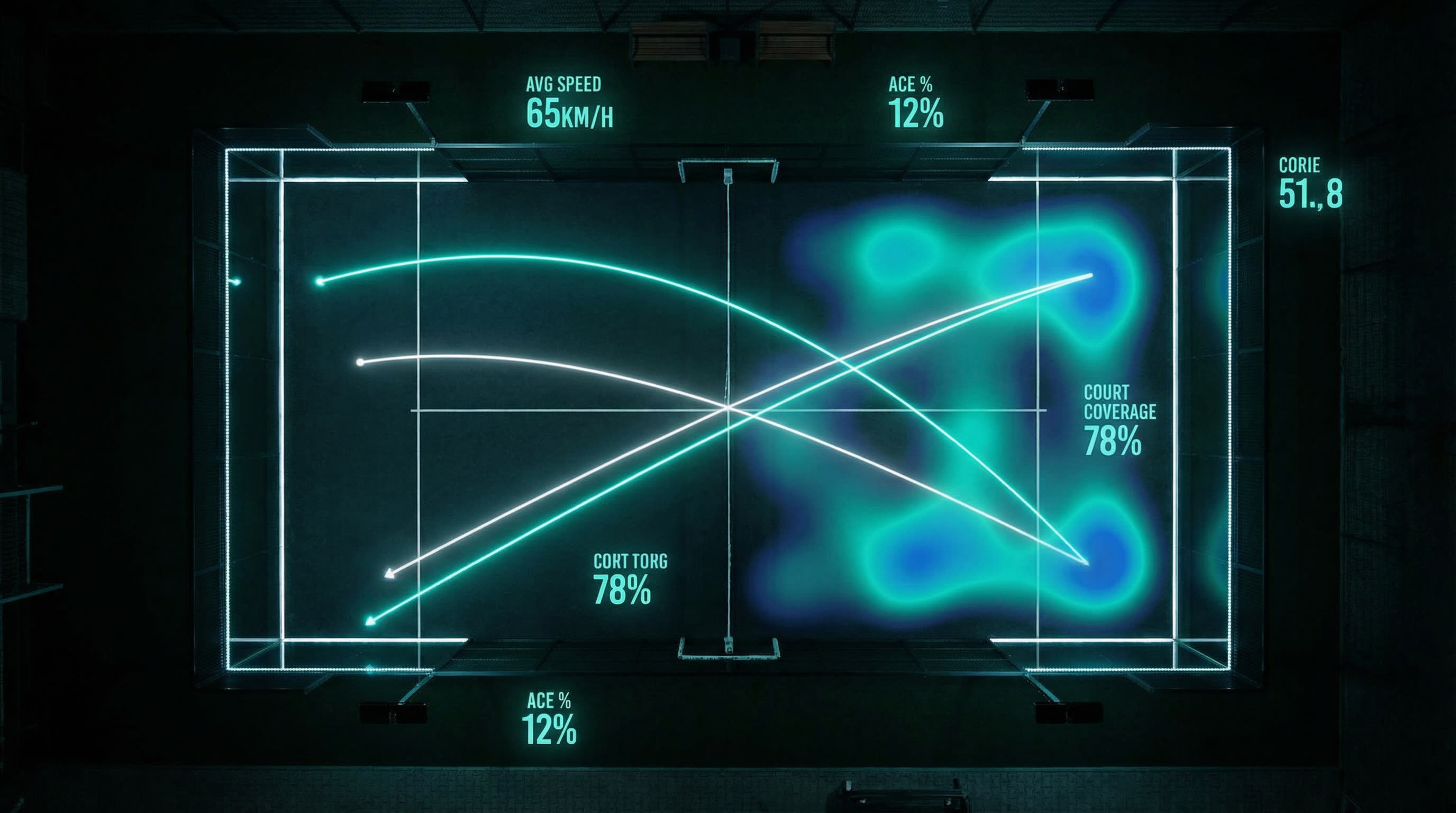
COVERAGE
Your rating follows you.
Not your partner.
A key objective of Raydel Rating is to support partner-independent evaluation in a doubles environment.
The system attributes rating-relevant performance to an individual player based on player-specific observed actions and inferred contributions — rather than relying exclusively on team-level outcome.
This is particularly important in padel, where traditional models use only opponent rating and match outcome — leaving technical execution, shot quality, and individual contribution completely unmeasured.
Each player's Raydel is computed independently — your partner's level contextualizes the result, it doesn't define your rating.
Inspired by Glicko-2, Raydel tracks a confidence layer alongside every rating — a player with 5 matches is treated differently than a veteran with 200. The more data, the more stable the number.
Where does your Raydel place you?
Every Raydel maps to a named skill tier across three universal rating scales. Click any row to see the full skill description for that level.
| Raydel | Skill Tier | 1.0–7.0 | UPR | |
|---|---|---|---|---|
| NR | Not Rated | Establishing | Establishing | |
|
Your Raydel Rating is established over your first five competitive matches. During this window, the system is collecting data on your win/loss results, opponent ratings, and match scores to calibrate your starting rating accurately. You will not appear on leaderboards or be assigned a tier label until this process is complete. Expect your provisional rating to fluctuate more than usual as the algorithm has a limited sample to work from. Results in these five matches carry full weight, so play competitively and honestly — sandbagging will result in a miscalibrated starting point that is difficult to correct. Once you complete your fifth rated match, your Raydel Rating and tier assignment will lock in and update normally after every subsequent match. |
||||
| < 800 | Beginner | 1.0–1.5 | 1.00–2.00 | |
Serve & ReturnFunctional at best — a flat, low-pace delivery aimed at getting the ball in play. Double faults occur regularly. Returns are reactive with minimal directional control. GroundstrokesHit with little shape or intent. The forehand may produce a few reliable exchanges; the backhand is inconsistent and often mistimed. Volleys & NetTentative and primarily defensive. Net positioning is rarely sought or maintained. Lob & OverheadThe lob exists only by accident. Smash attempts are uncoordinated and often mis-hit. No bandeja or vibora. Wall PlayEntirely incidental. Back glass and side glass rebounds catch the player by surprise; reading a rebound is not yet a skill. Tactics & MentalNo point construction — play is purely reactionary. Players are still acclimating to the game's unique glass environment and doubles structure. |
||||
| 800–1000 | Advanced Beginner | 1.5–2.5 | 2.00–3.50 | |
Serve & ReturnLands in consistently but offers no threat — placement is random, power is low. The second serve is cautious and easy to attack. Returns struck with more control but direction and depth are still inconsistent. GroundstrokesImproved mechanics: the forehand has a repeatable swing path and can sustain a short rally. The backhand remains the weaker side and breaks down under pace. Volleys & NetAttempted at net but lack confidence. The player reaches for the ball rather than moving into position. Lob & OverheadThe lob is beginning to emerge as a pressure escape, though height and depth are inconsistent. Smash attempts made with intention but poor execution. Bandeja and vibora are unknown. Wall PlayRemains largely accidental. The player may position near the glass but cannot reliably redirect a rebound with purpose. Tactics & MentalDoubles structure is approximate — players are aware it exists but cannot maintain it under pressure. Point construction is one-shot thinking. Technique erodes significantly in competitive situations. |
||||
| 1000–1200 | Low Intermediate | 2.5–3.0 | 3.50–4.50 | |
Serve & ReturnMore deliberate — placement toward the body or wide corner is attempted. The second serve is reliable enough to avoid chronic double faults. Returns hit with basic directional intent, though depth control is inconsistent. GroundstrokesRepeatable under moderate pace and can be directed cross-court or down the line with reasonable consistency. Power is controlled rather than generated. Volleys & NetMore comfortable at net, with the forehand volley showing more reliability than the backhand, which still breaks down under pressure. Lob & OverheadLob used purposefully as a defensive reset but lacks consistent depth and height, often landing short. Basic smash lands more often than not; the bandeja is underdeveloped; the vibora is absent. Wall PlayAttempted but unreliable. Players can identify when a back glass or side glass shot is coming but frequently misread pace or spin and mis-position. Tactics & MentalDoubles positioning is forming — players understand the parallel structure but struggle to shift laterally as a unit. Two-shot point construction is the ceiling. Composure holds in casual matches but erodes in tighter competitive situations. |
||||
| 1200–1400 | Intermediate | 3.0–3.5 | 4.50–6.00 | |
Serve & ReturnPlaced with intent targeting T or body with reasonable reliability. Second serve has enough margin to continue point-building. Returns directed and occasionally aggressive off weaker serves. GroundstrokesSolid mechanics on both wings. The forehand can generate pace and depth; the backhand is no longer a liability. Volleys & NetReliable on the forehand side; the backhand volley is serviceable but not aggressive. Net game is sought rather than avoided. Lob & OverheadThe lob becomes a real weapon — used deliberately to push opponents off net, with improved height and depth. Basic smash and a rudimentary bandeja are in the toolkit; the vibora is still emerging. Wall PlayBecoming functional — back glass defense is read with greater reliability and the player can redirect rather than just block. Side glass angles are recognized and defended. Tactics & MentalDoubles positioning is more structured with better lateral movement. Point construction extends to two- and three-shot patterns. The chiquita and volley are beginning to be used tactically. Players compete with more consistency and can reset after losing a game. |
||||
| 1400–1500 | Transition Band | ~3.5 | ~6.00–6.25 | |
Serve & ReturnConsistently placed with purpose. Second serve is solid and seldom exploited. Returns are directed and occasionally aggressive. GroundstrokesDependable under pace. Both wings can sustain a rally with depth and direction. Volleys & NetConfident — the forehand volley can finish points. The backhand volley holds up under moderate pressure. Lob & OverheadLob is well-placed and used both defensively and as a tactical reset. A workable bandeja resets the point from the back; the smash is reliable when the ball sits up; the vibora is attempted but inconsistent. Wall PlayFunctional on both back and side glass. Players can execute a defense off back glass and construct a play from it, though improvisation under pressure is limited. Tactics & MentalDoubles positioning and lateral unit movement are solid. Three- and four-shot point construction is achievable. Drop shot and chiquita used with tactical purpose. Players at this level are competitive but lose structure when opponents apply sustained pressure. |
||||
| 1500 | True Midpoint | 3.5 | 6.25 | |
Serve & ReturnReliable, placed, and occasionally threatened with pace or spin variation. Second serve holds up under pressure. Returns can be aggressive off shorter balls. GroundstrokesSolid on both wings with consistent depth and directional control. No chronic weakness on either side. Volleys & NetCompetent across both forehand and backhand. Net game is actively sought and maintained as a tactical position. Lob & OverheadLob is a genuine tactical weapon — hit with depth, intent, and appropriate height to push opponents back. Bandeja used correctly to maintain net position; the vibora is emerging as an executable shot. Wall PlayA real part of the game — back glass defense is read and redirected with confidence. Side glass angles are both defended and constructed. Tactics & MentalDoubles positioning maintained throughout the point with proper lateral coverage. Four-or-more shot point construction with deliberate patterns. Drop shot and chiquita used with purpose. Players begin to manage match momentum rather than just react to it. |
||||
| 1500–1700 | Upper Intermediate | 3.5–4.0 | 6.25–7.75 | |
Serve & ReturnVaried — pace, slice, and body targets are deployed deliberately. Second serve aggressive enough to limit the returner's options. Returns can open the point with direction and pace. GroundstrokesConsistent under pace and spin with the ability to hit depth and change direction within a rally. Volleys & NetA weapon — forehand and backhand volleys are used to redirect, angle, and finish points at the net. Lob & OverheadLob deployed both defensively and offensively with height and depth well controlled. Bandeja is reliable; the vibora is increasingly confident; smash executed cleanly when the ball sits up. Wall PlayIntegrated into the game plan — back glass defense is used to extend and reset; side glass angles are beginning to be played with construction in mind. Tactics & MentalDoubles positioning is fluid with clear understanding of when to advance and when to hold. Five- and six-shot point construction achievable. Drop shot, chiquita, and block used with tactical precision. Players read match situations effectively and sustain composure through extended competitive sets. |
||||
| 1700–1900 | Advanced | 4.0–4.5 | 7.75–9.25 | |
Serve & ReturnA tactical weapon — pace, slice, and placement are varied with disguise. Second serve aggressive enough to demand respect. Returns are offensive, frequently attacking short serves outright. GroundstrokesStruck with pace, spin, and depth across both wings with minimal breakdown under pressure. Volleys & NetAggressive and precise — forehand and backhand volleys are used to open the court, angle the ball, and close out points. Lob & OverheadLob hit with high accuracy in depth and trajectory — used to shift momentum. Bandeja controlled under pressure; vibora executed reliably to redirect off glass; smash clean when the ball sits up. Wall PlayA genuine tactical dimension. Back glass defense becomes a launching point for counter-attack. Side glass constructions are executed with control. Gancho executed with intent in appropriate situations; por quatro attempted when the angle presents. Tactics & MentalDoubles positioning is dynamic and well coordinated. Point construction is multi-dimensional. Composure holds through competitive pressure in tournament environments. |
||||
| 1900–2100 | High Advanced | 4.5–5.0 | 9.25–10.50 | |
Serve & ReturnApplies real pressure — placement, speed, and spin variation combined with a reliable, aggressive second serve. Returns are consistently offensive and can outright punish a weak delivery. GroundstrokesPowerful and directional at high pace with excellent consistency. Player can shift pace and spin deliberately to manipulate the point. Volleys & NetSharp and finishing-quality on both sides, with the ability to redirect pace and create angles under pressure at the net. Lob & OverheadLob is precise — used as both a defensive weapon and offensive tool. The bandeja is controlled and disguised; the vibora is executed with power and direction; smash finishes cleanly. The gancho is used confidently in the right moments. Wall PlaySophisticated — back glass defense is launched into counter-attack with control. Side glass constructions are executed deliberately as tactical moves. Bajada and rulo attempts begin to appear; players can read and attack a lob from the back court. Tactics & MentalPoint construction is layered and complex. Players perform under tournament pressure and read opponents at a high level. |
||||
| 2100–2300 | Tournament Player | 5.0–5.5 | 10.50–11.50 | |
Serve & ReturnA genuine weapon that can win free points — placement, spin, and kick are varied with timing and disguise. Second serve is consistently aggressive. Returns are controlled, offensive, and shift the structure of the point from the first ball. GroundstrokesPowerful, deeply placed, and directionally controlled even at high incoming pace. Changes of direction and pace are made to construct openings. Volleys & NetPrecise, aggressive, and finishing-quality on both wings under sustained pressure. Lob & OverheadPerfectly calibrated lob deployed in the right moments. Bandeja, vibora, and smash all executed reliably and correctly selected for the situation, with disguise beginning to appear. Wall PlayFully integrated — back glass and side glass used both defensively and constructively. Gancho is reliable; bajada and rulo executed in the right moments with confidence; por quatro attempts are calculated and well-timed. Tactics & MentalDoubles positioning is elite-level in lateral coverage, rotation, and decision speed. Point construction is multi-layered, systematic, and opponent-specific. Pressure management is a distinguishing strength — these players perform at their ceiling in decisive moments. |
||||
| 2300–2500 | Professional | 5.5–6.5 | 11.50–12.00 | |
Serve & ReturnMulti-option weapon — pace, slice, kick, and body targeting varied with full disguise. A dangerous second serve that limits the returner's aggression. Returns are controlled offensives that set up the point from the first ball. GroundstrokesPowerful and directionally precise under full-pace rally conditions. Spin, slice, and changes of pace deployed as deliberate tactical tools. Volleys & NetFinishing shots on both wings — used to construct angles, redirect at pace, and close points with surgical precision. Lob & OverheadPrecisely calibrated in every situation — offensive and defensive. Bandeja, vibora, and smash selected correctly and executed at high quality with movement. Gancho is reliable and dangerous. Wall PlayA creative, tactical tool. Back glass and side glass constructions made with disguise. Por quatro executed with conviction. Bajada and rulo are clean, reliable shots. Tactics & MentalPoint construction is match-specific, adaptive, and pressurized. Doubles positioning is seamless. Players operate at a consistent elite level across long tournaments — mentally and physically. |
||||
| 2500+ | World Class / WPT-APT | 6.5–7.0 | 12.00–13.00 | |
Serve & ReturnMulti-dimensional weapon — pace, spin, and placement varied with full disguise and adaptable in real time based on the returner's tendencies. Returns are offensive, precise, and capable of immediately seizing net position. GroundstrokesPowerful, heavily varied in pace and spin, placed with precision under full-pace exchanges. The player manufactures advantage from neutral or defensive positions. Volleys & NetDecisive finishing shots with angles and redirections that most players at lower tiers physically cannot cover. Lob & OverheadControlled tactical weapon deployed with perfect calibration in every situation. Bandeja, vibora, and smash executed at speed with disguise, timing, and precision under movement. Gancho used creatively and dangerously. Wall PlayA canvas for point creation — por quatro, back glass, and side glass combinations constructed as attacking sequences. Bajada and rulo are weapons, not experiments. Tactics & MentalWhat separates this tier is shot creation — the ability to invent solutions under pressure rather than execute known patterns. Doubles movement, rotation, and coverage are seamless. Point construction is adaptive, unpredictable, and individualized to opponents. Psychologically and physically, these players compete at the highest level of the sport. |
||||
UPR (Universal Padel Rating) is the universal standard for padel player skill, running 1.00–13.00 with 13.00 representing WPT/APT world elite. Established by Raydel. ™ UPR · Universal Padel Rating
Works with what you have.
Raydel is designed to ingest match data from any source, normalize it into a canonical structure, and produce a consistent rating — regardless of how the match was captured.
Your full performance profile.
Technical Skills
Tactical / Positioning
Mental / Pressure
Every great sport has a skill language.
Padel's is being built now.
Ready to know your real rating?
Raydel is in development. Join the waitlist and be among the first to get a Raydel rating.
Join the Waitlist